
By Choose Wisely Group
A kitchen in Northern Virginia carries a lot of weight, because it hosts the early coffee run, the weeknight dinner, and the Saturday haul from the farmers’ market. At Choose Wisely Group, we talk with homeowners across the region who want the room to work harder without wasting money.
The right plan starts with knowing which changes need a permit, which ones tend to pay back, and which local resources can lower costs. Here is how we sort through the options with our clients.
Key Takeaways
- Permit rules: Virginia’s statewide building code requires permits for wall removal, electrical wiring, and plumbing changes, while cabinetry, flooring, and paint are listed as exempt.
- Return on cost: JLC’s 2025 Cost vs. Value report lists a midrange minor kitchen remodel in Washington, DC at about 100.5 percent of cost recouped, compared with about 48.9 percent for a major remodel.
- Energy savings: ENERGY STAR says certified refrigerators are about 9 percent more energy efficient than models that meet only the federal minimum.
- Contractor class: Virginia’s contractor licenses come in Class A, B, and C tiers, and the class sets the dollar value of work a contractor may perform.
Know Which Kitchen Changes Need a Permit Under Virginia’s Building Code
Virginia’s Uniform Statewide Building Code sets the baseline for remodeling permits across Northern Virginia. Section 108 calls for a permit before work that removes a wall, alters electrical wiring, or changes water supply, drain, or vent systems.
Permit Triggers and Exemptions at a Glance
- Permit required: A wall removal, new electrical circuits, or a re-piped sink all fall under the permit list in the state code.
- Listed exemptions: The code names cabinetry, floor finishes, and the application of paint or wallpaper as exempt from permits.
- Gray areas: Countertops do not appear by name in the exemption list, so confirm the rule with your local building office before ordering slabs.
Local offices can apply the rules differently, and an owner may request a permit even for exempt work, in which case inspections follow. A quick call to the building office in your county or city settles the question before demolition starts.
Weigh Cost Against Return Using the Washington, DC Cost vs. Value Data
Renovation budgets stretch further when the scope matches what the market rewards. JLC’s 2025 Cost vs. Value report publishes Washington, DC figures for both a minor and a major midrange kitchen remodel.
Remodel Scopes Compared
- Minor remodel: JLC lists a job cost of $27,308 against a resale value of $27,450, which works out to about 100.5 percent of cost recouped.
- Major remodel: The same report lists $79,988 in cost and $39,088 in resale value, or about 48.9 percent recouped.
- Data caveat: Figures are survey-based estimates for Washington, DC, so individual Northern Virginia neighborhoods may land higher or lower.
Smaller refreshes sit closer to the minor-remodel category, while a full gut renovation lands in the major category. Your own timeline in the home should shape which path makes sense.
Pair New Appliances With Dominion Energy Virginia and ENERGY STAR Savings
Utility programs are worth checking before any appliance order, and Dominion Energy Virginia’s website says it offers rebates on energy-efficient appliances. ENERGY STAR, the federal program, publishes efficiency benchmarks that are worth comparing as you shop.
Efficiency Numbers Worth Comparing
- Refrigerators: ENERGY STAR says certified models are about 9 percent more efficient than models that meet only the federal minimum.
- Dishwashers: ENERGY STAR says a certified standard-size unit costs about $50 per year to run and can save about 5,800 gallons of water over its lifetime.
- Rebate check: Programs change over time, so confirm current amounts and eligibility with your utility before you buy.
Appliance choices also shape the cabinet and electrical layout, so settle them early. Bring model specifications to your contractor before demolition begins.
Design Around the Old Town Alexandria Farmers’ Market Haul
Plenty of Northern Virginia cooks plan their week around the Old Town Alexandria Farmers’ Market, which the City of Alexandria says has operated at Market Square since 1753. The market opens every Saturday from 7 a.m. to noon, and it sits temporarily on the 100 block of North Royal Street and in the Tavern Square courtyard while City Hall and Market Square are renovated.
Kitchen Features That Handle Fresh Produce
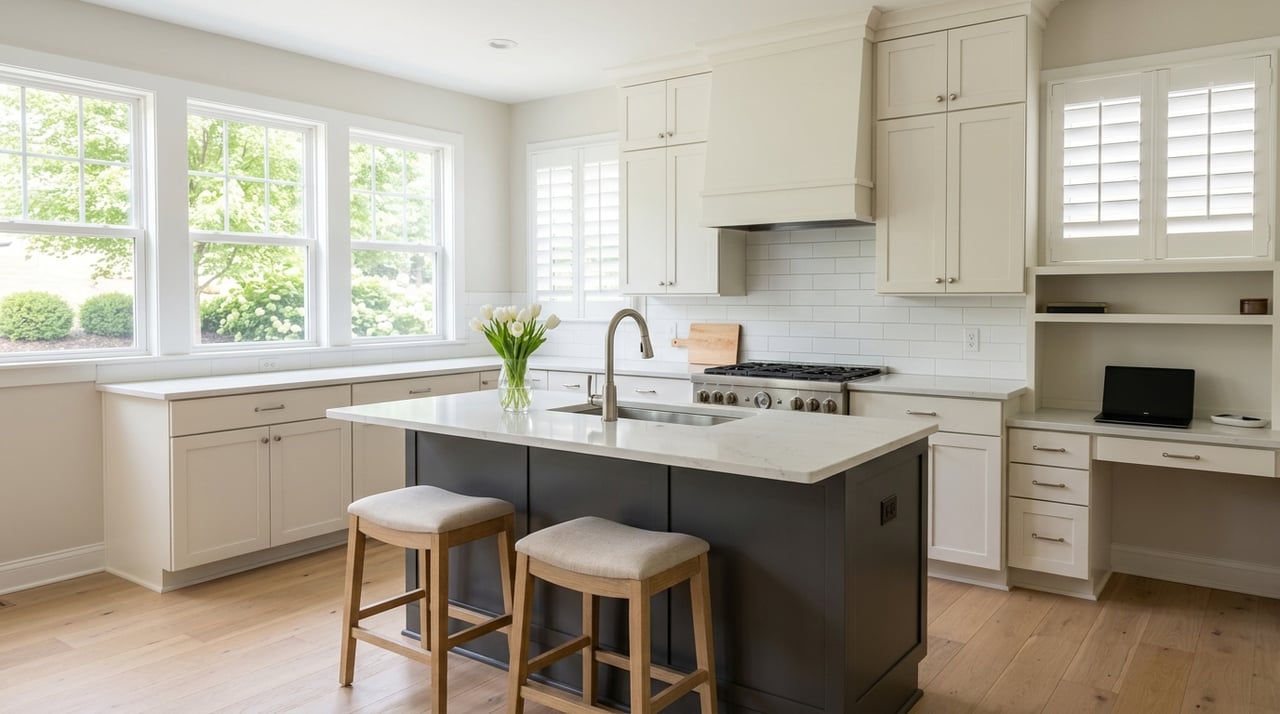
- Prep island: A second work surface near the sink gives you room to wash, trim, and sort a full Saturday haul.
- Deep drawers: Pull-out storage keeps heavy produce, crocks, and cast iron within easy reach.
- Pantry zone: A pantry shelf and a cool, dry cabinet give weekly market finds a dedicated landing spot.
A layout that follows the path from bag to refrigerator to cutting board saves steps all week. Sketch that path before choosing cabinet sizes.
Hire a Licensed Contractor Through Virginia’s DPOR Classes
Virginia’s Department of Professional and Occupational Regulation licenses contractors in Class A, B, and C tiers. The class sets the monetary value of contracts or projects a contractor may perform, and a separate specialty classification sets the type of work allowed.
License Details to Confirm
- License class: Ask for the Class A, B, or C designation and confirm it fits the size of your project.
- Specialty: Check that the classification covers the work, such as electrical or plumbing, that your plan requires.
- Written scope: Request a contract that lists materials, permits, and payment milestones before work begins.
Verify each license with DPOR before signing anything. A clear scope and schedule protect both you and the crew.
FAQs
What are the best kitchen upgrade ideas for a limited budget?
Cabinet refacing or painting, new hardware, updated lighting, and a single appliance swap can change the room without opening walls. Cabinetry, flooring, and paint are listed as permit-exempt in Virginia’s statewide code, which keeps the scope simpler. Prices vary by contractor, so gather written quotes before you commit.
How do I know if my remodel needs a permit?
Work that removes a wall or touches wiring or plumbing generally calls for a permit under Virginia’s statewide code. Your county or city building office has the final word on local requirements. Ask before you buy materials.
Should I remodel before putting my home on the market?
The answer depends on your timeline and budget. JLC’s 2025 Washington, DC figures show minor kitchen remodels recouping close to their cost while major ones recouped about half, so a focused refresh is worth weighing against a gut renovation. We walk our clients through that math before they commit to any project.
Reach Out to Us at Choose Wisely Group
If a kitchen project is on your list, reach out to Choose Wisely Group to talk through your timeline, your budget, and what the work could mean for your home’s value.