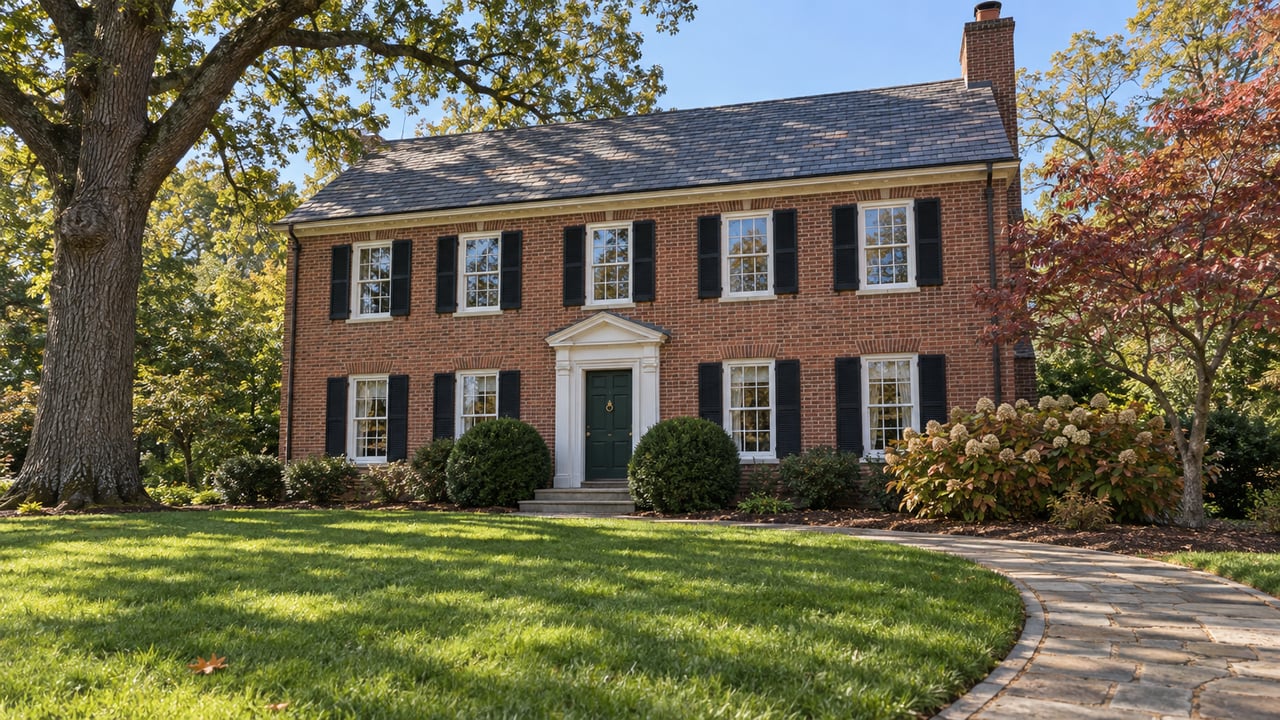
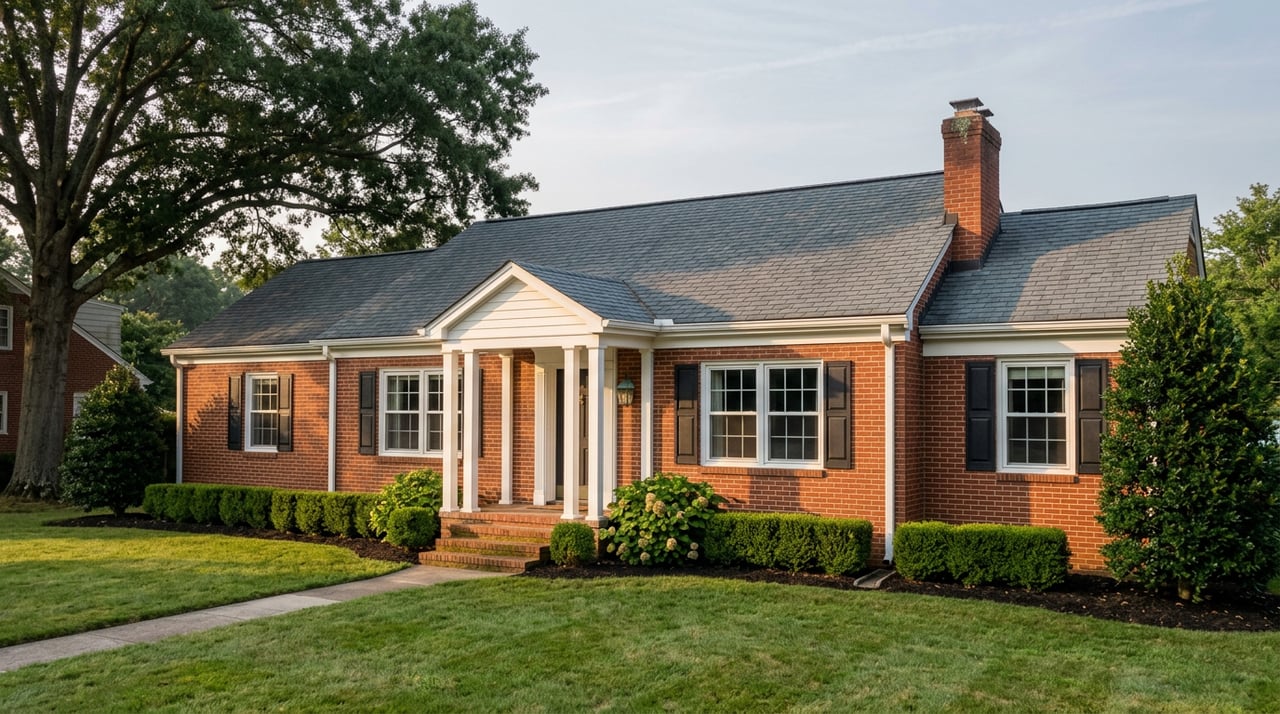
A homeowner in North Highlands got two offers on her house within the same week this spring. One came from a young family, priced against the block's usual single-family comps. The other came from a small development group, offering more, and citing the lot's zoning as the reason. She assumed the higher number simply won.
It isn't that simple. The builder's number wasn't really a home price. It was a bet on how a Virginia court case turns out, stacked on top of a bet on what a duplex or six-plex actually resells for once it's built. Both of those numbers have been moving all year, and neither one has settled.
If you own a single-family home in an eligible Arlington zoning district, that's the story worth understanding before you list.
The Ordinance That's Back, But Only on a Technicality
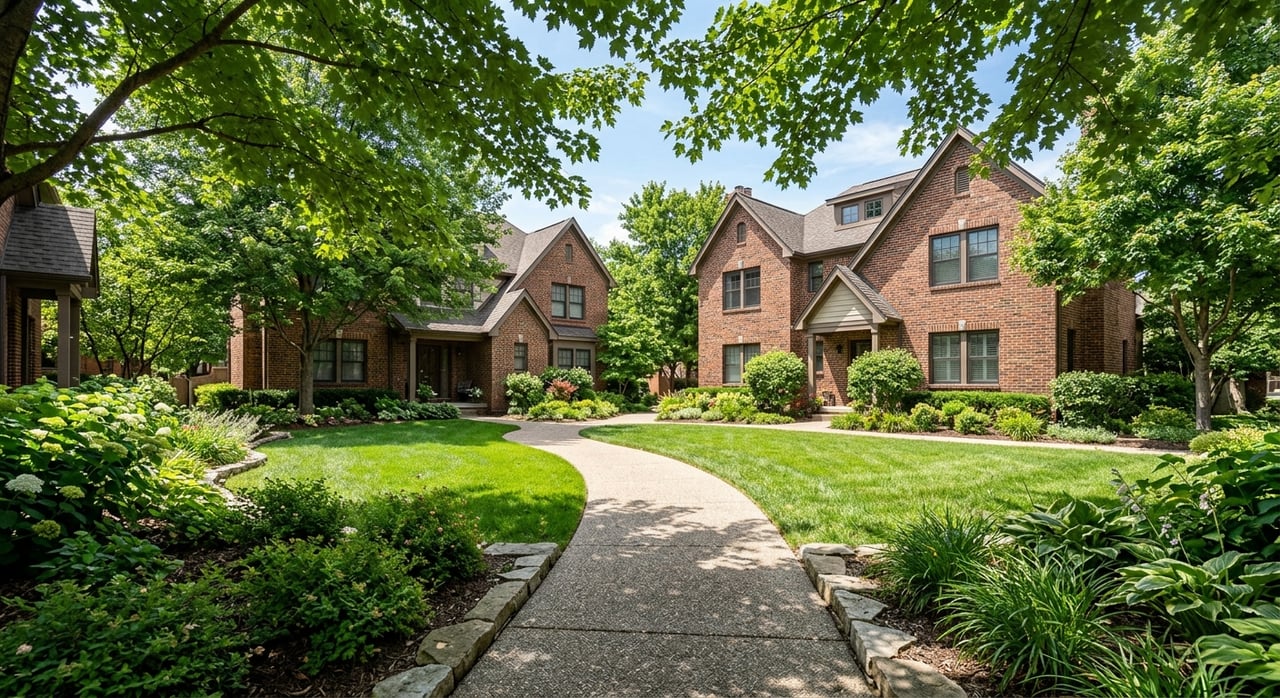
Arlington County's Expanded Housing Option, known locally as Missing Middle, cleared the County Board in March 2023 and took effect that July, allowing duplexes, townhouses, and small multiplexes of up to six units on lots that had only ever permitted one house. A group of homeowners sued almost immediately, and, as Arlington Magazine reported, in September 2024 a circuit court judge voided the ordinance entirely, ruling that the county had skipped required procedural steps and hadn't adequately studied local impacts.
That looked like the end of it. It wasn't. In June 2025, ARLnow reported that the Virginia Court of Appeals reversed that ruling, putting EHO back on the books. But read the reversal closely and it doesn't say the ordinance is legal. It says the trial court left out a developer, Wilsons Ventures, who should have been named as a party to the case. That's a procedural fix, not a verdict on the merits.
The case kept climbing. In April 2026 ARLnow reported that the Virginia Supreme Court heard arguments on whether to take it up at all, and as ARLnow reported on May 19, 2026, the court agreed to review it, again on that same narrow procedural question about which parties belong in the lawsuit. The underlying question of whether Missing Middle is legal has still never been decided by a Virginia court on the merits.
What a Builder's Number Is Actually Pricing In
When a development group tells a seller their lot is worth more because of EHO, they aren't quoting a fixed premium. They're quoting a discounted bet, and the discount has two parts.
The first is timing risk. According to YIMBY Law Journal, Neighbors for Neighborhoods, the group funding the homeowners' side of the litigation, expects the case to go back to trial within three to six months of the May 19 decision. Count forward from that date and the next real courtroom action lands sometime in the second half of 2026, right in the middle of the window most Arlington listings take to go from contract to closing. A builder who buys your lot today is wagering that permits, groundbreaking, and finished sales can happen before the legal ground shifts under the project again.
This isn't a hypothetical concern. It's already happened once. When the original lawsuit was filed back in 2023, developers pulled back sharply, filing far fewer EHO applications in the months after the suit landed than in the months before. Some projects that had been filed as EHO multiplexes have since been resubmitted as ordinary single-family builds, a sign that at least some builders decided the legal uncertainty wasn't worth the wait. That history is exactly why a builder's offer on your lot today carries a discount for risk that a family buyer's offer doesn't.
The Ceiling on What the Finished Product Actually Sells For
The second discount is simpler and just as important: EHO units don't sell for anywhere close to what a new single-family home sells for, so the math on a teardown only works if the land was cheap enough to begin with.
Through the end of 2025, the average EHO unit built in Arlington ran about 1,649 square feet, against an average of 5,348 square feet for a newly built single-family home in the same period. The one documented EHO resale in zip code 22201 closed at $1,615,000, roughly 45 percent below the average price of a newly built single-family home in that same zip code. A five-bedroom, three-and-a-half-bath duplex in North Highlands sold in March 2026 for $1,610,000, a solid number, but nowhere near what a comparably sized new single-family home in that pocket of Arlington would command.
The six-plex under construction at 3802 14th Street North, an easy walk from the Virginia Square Metro, shows how the math has to work for a builder to make sense of it. The house it replaced, a century-old property with a bedroom you had to walk through to reach a third bedroom upstairs, sold for $913,000 in 2022 and was assessed at $954,000 in 2024. That's a cheap enough land basis to support six smaller units instead of one large one. A block away, a 2011-built single-family home sold in 2024 for $1.8 million, and Arlington's average new single-family home sells for around $2.4 million countywide. The six-plex builder isn't competing for that number. They're depending on the land having cost them little enough that six units in the $1,382 to $1,562 square foot range still clear a profit.
That's the ceiling. Multi-unit product in Arlington sells for meaningfully less per home than new single-family construction, which means the "upside" a builder is offering you is really the upside of buying your land cheap, not the upside of the finished building.
There's also an administrative cost that gets lost in the excitement over zoning upside. As Custom Builder Online reports, before EHO existed, a comparable small multi-unit project, the Ballston Duplex on Washington Boulevard, had to go through the county's full 4.1 Site Plan process. The architect on that project has described the process as one built for major, multi-year developments, awkwardly applied to a two-unit building. It took over two years from application to approval in 2021. That timeline is expensive.
Your lot isn't priced for what it is. Right now it's priced for what a builder believes it's allowed to become, discounted for how long they think that belief will hold.
What This Actually Means If You're Selling This Year
A few things worth knowing before you take a call from a developer or price your home based on someone else's zoning story.
First, know your specific zoning district. As Patch reports, the county caps EHO permits annually, and the cap is split unevenly:
- R-5 lots: 7 permits per year
- R-6 lots: 30 permits per year
- R-8, R-10, and R-20 combined: 21 permits per year
As Patch reports, the whole framework sunsets at the end of 2028 unless extended. A willing builder still needs an open slot in your specific category.
Second, get two honest valuations, not one. One should reflect a straightforward sale to a family buyer, grounded in current single-family comps on your block. The other, if you want to explore it, should reflect what finished EHO product actually resells for in your zip code today, not merely a builder's estimate. The 45 percent gap in zip 22201 is a real data point, not an outlier to wave away.
Third, decide how much legal uncertainty you're comfortable carrying. A family-buyer sale closes on a normal timeline with none of this hanging over it. A builder sale ties your closing, in part, to a court calendar that even the people funding the lawsuit describe as still unresolved for another several months at minimum.
None of this changes the fact that thoughtful preparation still drives the strongest outcome for most Arlington sellers. A well-staged, well-maintained single-family home continues to draw real competition from family buyers regardless of what zoning conversation is happening down the street. If a renovation or refresh would widen that pool, Compass Concierge can fund it without tying your timeline to litigation you don't control.
A Few Questions Sellers Ask
Does every home in Arlington qualify for EHO? No. Eligibility depends on the property's specific zoning district.
Is the Missing Middle ordinance definitely staying in effect? It's currently in effect, but only because of a procedural ruling about who was included in the lawsuit. The core legal question of whether the ordinance itself is valid has not been decided, and the Virginia Supreme Court's review announced in May 2026 concerns that same procedural issue, not the merits.
Should I wait to sell until the lawsuit is resolved? That depends on what you're selling for. If you're pricing against family-buyer comps, the litigation has little bearing on your timeline. If you're weighing a builder's offer that assumes EHO holds, waiting for more legal clarity reduces your risk, but it also means waiting for a case that even the plaintiffs' own funding group expects to take several more months to reach trial.
Every Arlington lot is different, and the right answer depends on your zoning district, your home's condition, and how much uncertainty you're willing to carry into a closing. If you're weighing what your property is actually worth under these conditions, Choose Wisely Group can walk through both paths with you and help you decide with real numbers. Let's Connect.
This article is general information, not legal, tax or financial advice. Consult a qualified professional about your situation.